
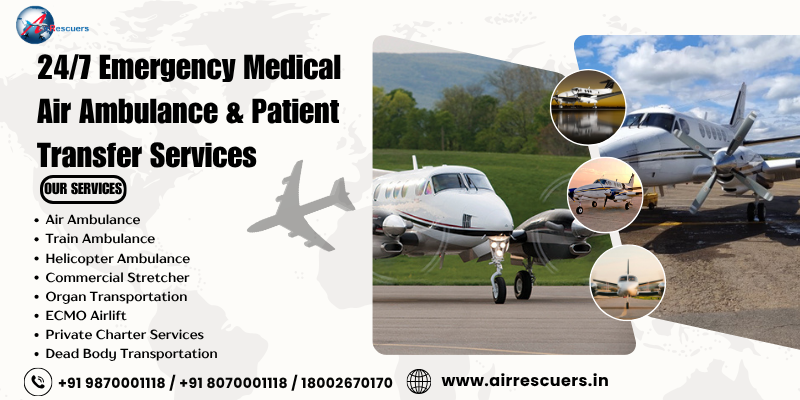
24/7 Emergency Medical Air Ambulance & Patient Transfer Services
Medical Transport from Hospital to Home Near Me
After receiving treatment in a hospital, the journey back home is an important phase of recovery that requires care, safety, and proper medical support. Medical Transport from Hospital to Home Near Me is designed to ensure that patients are transferred safely from hospital beds to their homes without any risk or discomfort during travel.
This specialized service is especially helpful for patients who are still weak, recovering from surgery, or require continuous medical supervision such as oxygen support, monitoring, or mobility assistance. Instead of using regular transportation, which may not be safe for such conditions, Air Rescuers provide fully equipped ambulances and trained medical staff to ensure a smooth and secure transfer.With a strong focus on patient comfort and safety, Air Rescuers bridges the gap between hospital care and home recovery. Their team carefully plans every step of the journey—from assessing the patient’s condition to arranging the right medical equipment and ensuring continuous monitoring during transit.
Book Your Air Ambulance Now! Get a Call Back in Just 10 Seconds!
Types of Hospital to Home Transport Services
Medical Transport from Hospital to Home offers a range of specialized transport options to ensure every patient receives the right level of care during discharge and travel. The type of service is chosen based on the patient’s medical condition, mobility, and need for supervision.
- ICU Ambulance Transport ICU ambulances are used for critically ill patients who require continuous medical monitoring during the journey. These ambulances are equipped with ventilators, cardiac monitors, oxygen support, and emergency medicines. A trained medical team is always present to manage any sudden complications.
- Basic Life Support (BLS) Ambulance BLS ambulances are suitable for patients who are stable but still require basic medical assistance. These vehicles include oxygen support, stretchers, and essential monitoring equipment. They are commonly used for post-surgery recovery patients and elderly individuals.
- Advanced Life Support (ALS) Ambulance ALS ambulances are designed for patients who need a higher level of medical care than basic support. They include advanced equipment such as defibrillators, infusion pumps, and advanced monitoring systems, along with trained paramedics and doctors.
- Wheelchair Transport Services This service is ideal for patients who are mobile but unable to walk long distances or use regular transport. Wheelchair-accessible vehicles ensure safe and comfortable movement from hospital to home.
- Stretcher Transport Services Stretcher ambulances are used for patients who are unable to sit or move independently. These vehicles are designed to provide safe lying-down transport with proper cushioning and medical supervision if required.
- Critical Care Transport for High-Risk Patients For patients in unstable or high-risk conditions, specialized critical care transport is arranged. This includes ICU-level setup, constant monitoring, and a highly trained emergency medical team.
Step-by-Step Transport Process
The process followed by Medical Transport from Hospital to Home is carefully planned to ensure safety, comfort, and continuous medical care for patients during their discharge journey. Each step is handled by trained professionals who focus on minimizing risk and maximizing patient stability.
- Initial Request and Booking : The process begins when the hospital, patient, or family contacts Air Rescuers. Basic details such as the patient’s condition, discharge status, and home location are collected to understand the level of care required.
- Medical Assessment: A qualified medical team reviews the patient’s condition before transport. This includes checking vital signs, ongoing treatments, mobility level, and any special requirements like oxygen or monitoring support.
- Planning the Transport: Based on the assessment, the appropriate ambulance type is selected—ICU, BLS, ALS, stretcher, or wheelchair transport. The team also plans the route, timing, and required medical equipment.
- Arrangement of Medical Equipment and Staff: Necessary equipment such as oxygen cylinders, monitors, stretchers, and emergency kits are prepared. A trained medical team, including paramedics or nurses, is assigned depending on the patient’s condition.
- Patient Stabilization: Before departure, the patient is carefully stabilized. All medical devices are checked, and the patient is prepared for safe movement from the hospital bed to the ambulance.
- Safe Transfer from Hospital: The patient is gently transferred from the hospital to the ambulance using proper handling techniques to avoid discomfort or complications.
- In-Transit Monitoring and Care: During the journey, the medical team continuously monitors the patient’s condition. Vital signs are tracked, and immediate care is provided if needed to ensure stability throughout the trip.
- Arrival at Home and Handover: Once the patient reaches home, the team ensures safe transfer inside the residence. If required, they assist in setting up the patient in a bed and provide guidance to family members.
- Post-Transport Support: After completion, Air Rescuers may offer additional support such as medical advice or follow-up coordination to ensure a smooth recovery at home.
Medical Equipment Used
Medical Transport from Hospital to Home is equipped with advanced medical tools that ensure patients remain safe, stable, and comfortable throughout their journey. Even though the transport is from hospital to home, many patients still require continuous monitoring and support, making proper equipment essential.
- Oxygen Support Systems-Portable oxygen cylinders and oxygen concentrators are used for patients who have breathing difficulties. These systems ensure a continuous oxygen supply during travel, especially for post-surgery, elderly, or respiratory patients.
- Patient Monitoring Devices-Vital sign monitors are used to track heart rate, blood pressure, oxygen saturation (SpO₂), and respiratory rate. These devices help the Medical Air Ambulance team observe any changes in the patient’s condition in real time.
- Stretchers and Adjustable Beds-Comfortable and secure stretchers are used for safe patient movement. Some ambulances also include adjustable beds that help position the patient comfortably during transport, reducing pain and stress.
- Suction Machines-Suction devices are used to clear airways in case of excess mucus or breathing blockage. This is especially important for patients who are unconscious or unable to clear their airways independently.
- Infusion and Syringe Pumps-These devices are used to deliver fluids, medications, or pain relief in controlled doses. They are essential for patients who need ongoing IV treatment during transport.
- Emergency Medical Kits-Fully stocked emergency kits include essential medicines, first aid supplies, and life-saving drugs for managing sudden complications such as pain, allergic reactions, or cardiac issues.
- Defibrillators (for Critical Cases)-In advanced or ICU ambulances, defibrillators are available to manage sudden cardiac emergencies and restore normal heart rhythm if needed.
- Wheelchair and Mobility Aids-For stable patients, wheelchairs and mobility support equipment are used to ensure safe and easy movement from hospital to ambulance and from ambulance to home.
- Coordination with Hospital Staff-Before departure, the medical team coordinates with hospital doctors to understand the patient’s condition, ongoing treatment, and discharge instructions. This ensures a smooth handover and continuity of care at home.
- Hygiene and Safety Equipment-Masks, gloves, disinfectants, and sterilized tools are used to maintain strict hygiene standards and prevent infections during transport.
- Medical Team Expertise-The strength of Medical Transport from Hospital to Home lies not only in its vehicles and equipment but also in its highly skilled and experienced medical team. Every patient transfer is handled with precision, care, and clinical expertise to ensure safety throughout the journey from hospital to home.
- Experienced Doctors and Paramedics-Each transport is supported by qualified doctors, nurses, and paramedics who specialize in emergency and critical care medicine. They are trained to handle post-surgery patients, elderly individuals, and those requiring continuous monitoring during transit.
- Specialized Training in Patient Handling-The medical team is trained in safe patient lifting, transfer techniques, and emergency response procedures. This ensures that patients are moved without causing pain, discomfort, or medical complications.
- Emergency Response Skills-Even during routine hospital-to-home transfers, unexpected medical situations can arise. The team is trained to respond immediately to emergencies such as breathing difficulties, sudden drops in blood pressure, or pain episodes, ensuring patient stability at all times.
- Continuous Monitoring Expertise-Medical Air Ambulance professionals onboard are skilled in using advanced monitoring equipment. They closely track vital signs like heart rate, oxygen levels, and blood pressure throughout the journey and take immediate action if any changes are detected.
- Post-Hospital Care Understanding-Unlike emergency transport, hospital-to-home transfers require a strong understanding of recovery care. The team ensures that patients are stable enough for discharge and continue to receive appropriate care during the transition phase.
- Compassionate Patient Support-Beyond medical expertise, the team also provides emotional support to patients and families. Their calm and reassuring approach helps reduce stress and makes the journey more comfortable.
Cost Factors in Hospital to Home Transport
The cost of Medical Transport from Hospital to Home depends on several important factors. While the service is designed to ensure safe and comfortable patient discharge, pricing varies based on medical needs, distance, and level of care required during the journey.
Distance Between Hospital and Home
One of the primary cost factors is the distance covered during transport. Longer distances require more fuel, time, and operational coordination, which increases the overall expense.
Type of Ambulance Required
The choice of ambulance significantly affects cost:
ICU Ambulance: Higher cost due to advanced life-support systems and critical care setup
BLS Ambulance: Moderate cost for stable patients
Stretcher or Wheelchair Ambulance: More affordable option for non-critical cases
- Patient’s Medical Condition
Patients who require continuous monitoring, oxygen support, or emergency care during transit will need more medical resources. Critical conditions increase the need for specialized equipment and trained staff, which impacts pricing. - Medical Equipment Used
The use of advanced equipment such as ventilators, oxygen cylinders, cardiac monitors, infusion pumps, and emergency kits adds to the cost due to their complexity and usage requirements. - Medical Team Requirements
The number and expertise of Medical Air Ambulance professionals assigned to the transport also influence cost. Critical patients may require doctors, nurses, and paramedics, while stable patients may only need basic support staff. - Urgency of Service
Emergency or immediate discharge requests may cost more due to quick arrangements, priority scheduling, and rapid deployment of resources. - Time of Transfer
Transfers during late-night hours, holidays, or peak emergency periods may slightly increase costs due to operational demand and availability of staff. - Additional Support Services
Extra services such as stair assistance, home setup help, or specialized handling for elderly patients may also affect the final cost. - Insurance Coverage
In some cases, health insurance may partially or fully cover hospital-to-home transport expenses. This depends on the policy and medical necessity. - Ground Logistics and Coordination
Charges may also include hospital coordination, ambulance dispatch, and safe handover at the patient’s residence, ensuring a smooth and complete service.